How to Make Espresso at Home
Sep 18, 2026
Quick Takeaways
• You need an espresso machine, grinder, scale, and fresh coffee to get started.
• Espresso requires a much finer grind than drip coffee.
• A common starting point is an 18-gram dose producing about 36 grams of espresso.
• Aim for roughly 25–30 seconds of extraction time as a starting point.
• Shots running too fast usually need a finer grind; shots running too slowly usually need a coarser grind.
• Sour and bitter shots can often be corrected by adjusting grind size, dose, or extraction.
Making espresso at home can look intimidating.
There are machines with pressure gauges, portafilters, tampers, scales, grinders, baskets, and enough terminology to make your first attempt feel like an AP chemistry experiment.
But it doesn't have to be that complicated.
Once you understand a few basic variables like dose, grind size, brew ratio, and extraction time, making espresso becomes much more approachable.
What Equipment Do You Need?
You don't need a commercial cafe setup to make good espresso at home. But there are some must-haves.
At minimum, you'll want:
• An espresso machine
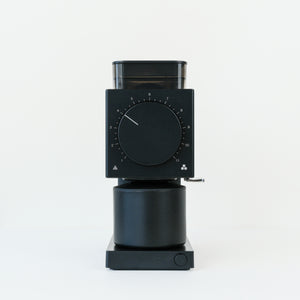
• An espresso grinder
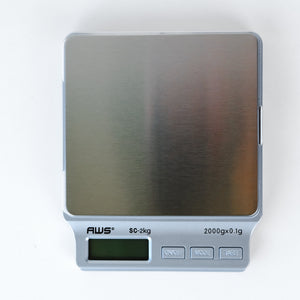
• A scale
• Fresh coffee
• A tamper
• A portafilter and basket
A good grinder is especially important. Espresso requires a much finer and more precise grind than drip coffee, and small changes in grind size can have a big effect on extraction.
If you're building a home coffee station, check out Stone Creek's brewing tools.
Choose Fresh Coffee
Freshness matters for espresso just as it does for other brewing methods.
You don't need a special species of coffee bean labeled "espresso bean." Espresso is a brewing method, not a type of coffee plant.
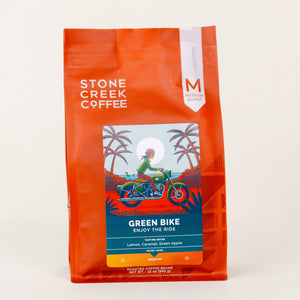
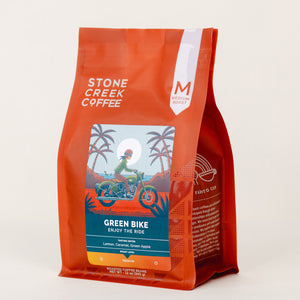
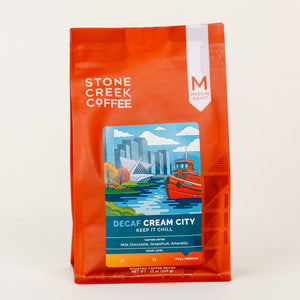
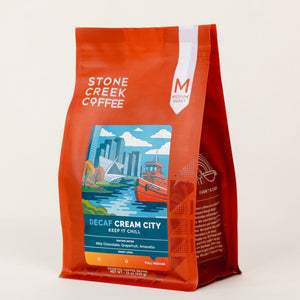
That said, some coffees are developed specifically to perform well as espresso. At Stone Creek, Green Bike is our core espresso option and a great place to start. Looking for decaf? Try our Decaf Cream City.
Grind Your Coffee Fine
Espresso requires a fine grind.
The exact setting will depend on your grinder, machine, coffee, and even environmental conditions. That's why there isn't one universal espresso grind setting that works everywhere.
Instead, think of grind size as a variable you adjust to control how quickly water moves through the coffee. (Pro-tip: think of sand vs. stone and how fast or slow water moves through them.)
If your shot runs too quickly, grind finer.
If it runs too slowly, grind coarser.
For a deeper explanation, see our guide to why grind size matters more than you think.
 Start With a Dose
Dose refers to how much dry coffee you put into the portafilter.
For a typical double shot, 18 grams is a reasonable starting point, although the appropriate dose depends on the basket you're using.
As you dial in your technique, the important thing is consistency.
If you use 18 grams for one shot and 21 grams for another, it becomes much harder to figure out why the shots taste different.
A scale makes this much easier.
Tamp Evenly
Once your coffee is ground into the portafilter, distribute it evenly and tamp it firmly.
The goal isn't to see how much weight you can put behind the tamper. The goal is to create a level, consistent coffee bed.
An uneven coffee bed can allow water to find easier paths through the grounds, resulting in uneven extraction.
Keep your tamp level and consistent from shot to shot.
Understand Brew Ratio
Brew ratio compares the amount of dry coffee you start with to the amount of espresso you produce.
A common starting point is:
18 grams of coffee → 36 grams of espresso
That's a 1:2 ratio.
This isn't a “rule” by any means. Some coffees taste better at different ratios. But 1:2 gives a beginner a useful starting point.
How Long Should Espresso Take?
A typical starting target is around 25–30 seconds.
But time isn't the goal by itself.
If your shot takes 27 seconds but tastes terrible, making every future shot exactly 27 seconds isn't going to solve the problem.
Use time as information alongside taste and the amount of coffee you're using.
How to Troubleshoot Your Espresso
Your shot runs too fast
If your espresso is flowing much too quickly, your grind is probably too coarse.
Try grinding finer.
You can also check that you're using the appropriate dose and that your coffee bed is evenly distributed.
Your shot runs too slowly
If barely anything is coming out and the shot takes much longer than expected, your grind may be too fine.
Try grinding a little coarser.
Your espresso tastes sour
Sourness can be a sign of under-extraction.
Try grinding finer or allowing the shot to extract for longer.
Your espresso tastes bitter
Bitterness can be associated with over-extraction.
Try grinding a little coarser or reducing extraction.
Your shots are inconsistent
Consistency is often the first thing to address.
Use the same dose, distribute the coffee evenly, tamp consistently, and make one adjustment at a time.
Espresso is a Process, Not a Recipe
One of the biggest mistakes beginners make is looking for a single perfect espresso recipe.
Coffee changes. Different beans behave differently. Freshness changes. Grinders vary. Machines vary.
Instead of searching for a magic number, learn to recognize what your coffee is telling you.
Start with a recipe such as 18 grams in and 36 grams out in about 25–30 seconds. Then taste the result.
From there, make small adjustments.
That's how you move from following an espresso recipe to actually understanding espresso.
FAQ
Can I use regular coffee beans for espresso?
Absolutely. Espresso is a brewing method, not a particular type of bean. Many coffees can be brewed successfully as espresso.
What grind size should I use for espresso?
Espresso generally requires a fine grind. Your exact setting will depend on your grinder, machine, coffee, and desired extraction.
How much coffee goes into a double shot?
Around 18 grams is a common starting point, although the correct dose depends on the basket and machine you're using.
How long should an espresso shot take?
Around 25–30 seconds is a useful starting point, but taste is more important than hitting an exact time.
Why does my espresso taste sour?
Your coffee may be under-extracted. Try grinding finer or increasing extraction.
Why does my espresso taste bitter?
Your coffee may be over-extracted. Try grinding slightly coarser or reducing extraction.
Do I need an expensive espresso machine?
Not necessarily. A good machine and grinder can make the process easier and more consistent, but you don't need a commercial café setup to start making espresso at home.