Best Coffee Beans for Espresso
Oct 02, 2026
Quick Takeaways
• There is no special type of "espresso bean."
• Look for fresh coffee that matches the flavor profile you enjoy.
• Medium and darker roasts are popular for espresso, but lighter roasts can work beautifully too.
• Blends often provide balance and consistency, while single origins can highlight distinctive flavors.
• Your ideal espresso coffee depends partly on whether you're drinking it straight or with milk.
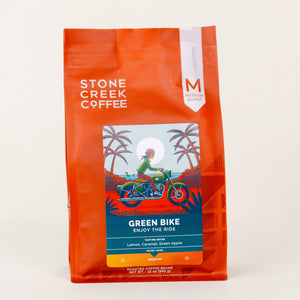
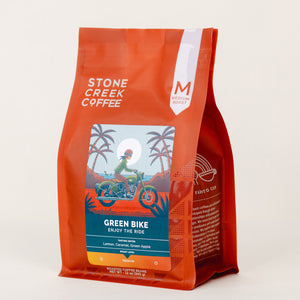
• Green Bike is Stone Creek's core espresso coffee and a great starting point.
If you've ever stood in front of a wall of coffee bags wondering which one you should use for espresso, you're not alone.
Coffee labeled "espresso roast." Coffee labeled "espresso blend." Single-origin coffee. Light roast. Medium roast. Dark roast.
Which one is actually the best?
The short answer is: the best espresso coffee is the coffee that produces the flavors you enjoy.
There isn't a special type of coffee bean that is required for espresso. Espresso is a brewing method, and many different coffees can work beautifully with it.
Start With Freshness
Freshness should be one of your first considerations when choosing espresso coffee.
Espresso makes the condition of your coffee especially noticeable because you're working with a relatively small amount of coffee and a concentrated brewing process.
Look for freshly roasted coffee and store it properly once you open the bag.
If you're buying whole beans, grind them shortly before brewing. Espresso requires a precise grind, so a quality grinder is an important part of the equation.
 What Roast Is Best for Espresso?
There's no universal answer.
Traditionally, espresso has often been associated with medium-dark and dark roasts. Those coffees can produce rich, chocolatey, nutty, caramelized flavors that work especially well in concentrated espresso and milk-based drinks.
But lighter roasts can also make excellent espresso.
A lighter roast may emphasize:
• Fruit
• Citrus
• Floral notes
• Bright acidity
• More complex flavors
A darker roast may emphasize:
• Chocolate
• Caramel
• Nuts
• Toasted flavors
• More pronounced roast character
If you're not sure what direction you prefer, explore Stone Creek's medium-roast coffees as a versatile starting point.
Blend vs. Single Origin
Both can be excellent.
Blends
Blends combine coffees from different origins to create a particular flavor profile.
For espresso, blends can be especially useful because they may be designed to provide balance, sweetness, body, and consistency.
Single Origin
Single-origin coffee comes from a particular geographic origin and can showcase distinctive characteristics associated with that coffee.
Single origins can make fascinating espresso, especially if you enjoy exploring different flavor profiles.
Neither approach is inherently better.
It comes down to what you want in your cup.
Drinking Espresso Straight?
If you drink espresso straight, you may want a coffee with enough complexity and balance to stand on its own.
You may enjoy a coffee with sweetness, acidity, fruit, floral characteristics, or other distinctive flavors.
This is a great place to experiment with different origins and roast levels.
Making Lattes and Cappuccinos?
Milk changes the equation.
Steamed milk naturally adds sweetness, richness, and texture. A coffee that tastes delicate and nuanced as a straight espresso may get lost when combined with a large amount of milk.
For milk drinks, many people prefer espresso with enough body and sweetness to remain noticeable.
That's one reason blends and more developed roast profiles are popular choices for espresso-based drinks.
Green Bike: A Great Place to Start
If you're looking for a Stone Creek coffee specifically for espresso, start with Green Bike.
It's Stone Creek's core espresso option and an excellent choice for experimenting with espresso at home.
Once you've gotten comfortable with your setup, there's no reason to stop there. Explore the broader Stone Creek coffee collection and experiment with different coffees.
Do You Need Coffee Labeled "Espresso"?
No.
The word "espresso" on a coffee bag can be helpful because it tells you the roaster believes the coffee is well suited to that brewing method.
But it doesn't mean the beans are fundamentally different from coffee intended for drip brewing.
You can absolutely experiment.
In fact, trying a coffee that isn't specifically marketed as an espresso coffee can be a fun way to discover what different roast levels and origins taste like when brewed under pressure.
Don't Forget the Grind
The coffee itself is only part of the equation.
Espresso requires a much finer grind than drip coffee, and grind size has a major effect on extraction.
Even an excellent coffee can taste sour, bitter, thin, or harsh if the grind isn't dialed in.
That's why it's useful to understand why grind size matters more than you think.
And if you're exploring brewing methods beyond espresso, our guide to choosing the right coffee roast for your brewing method is a good next step.
The Best Espresso Beans Are the Ones You Want to Drink
There are plenty of opinions about what makes the "best" espresso coffee. But ultimately, coffee is personal.
If you love a rich, chocolatey espresso with milk, choose accordingly.
If you prefer bright, fruit-forward espresso, look for a lighter roast.
If you want consistency every morning, a blend may be a great fit.
There's no single answer—and that's part of what makes espresso fun.
FAQ
What are the best coffee beans for espresso?
The best beans depend on your taste. Look for fresh coffee with a flavor profile and roast level you enjoy. Green Bike is Stone Creek's core espresso option.
Do you need special espresso beans?
No. Espresso is a brewing method, not a separate type of coffee bean.
Is dark roast better for espresso?
Not necessarily. Dark roasts can produce rich, bold espresso, while lighter roasts can highlight brighter and more complex flavors.
Are blends or single origins better for espresso?
Neither is automatically better. Blends can offer balance and consistency, while single origins can highlight distinctive flavors.
What coffee is best for a latte?
Coffee with enough body, sweetness, and intensity to stand up to steamed milk often works well. Green Bike is a natural place to start.
Can light-roast coffee be used for espresso?
Absolutely. Light-roast espresso can be bright, complex, and flavorful, although it may require more dialing-in than a darker roast.